"Sprouts provide up to 600 percent more vitamins than the full grown plant." Researchers at the University of Ulster, UK have found.
Let's say you have been living solely on your food storage for 3 months now and your supplies are dwindling. If summer has come and gone there isn't time to plant a garden, and your family is going to need vegetables. I know pirates are quite popular but many of them died of scurvy and I personally don't want to have that in common with them. With limited options in a survival scenario, your solution is SPROUTING. When a tiny little seed/grain, with all of its necessary vitamins and nutrients for growing packed inside, is sprouted it becomes a powerful super food!!
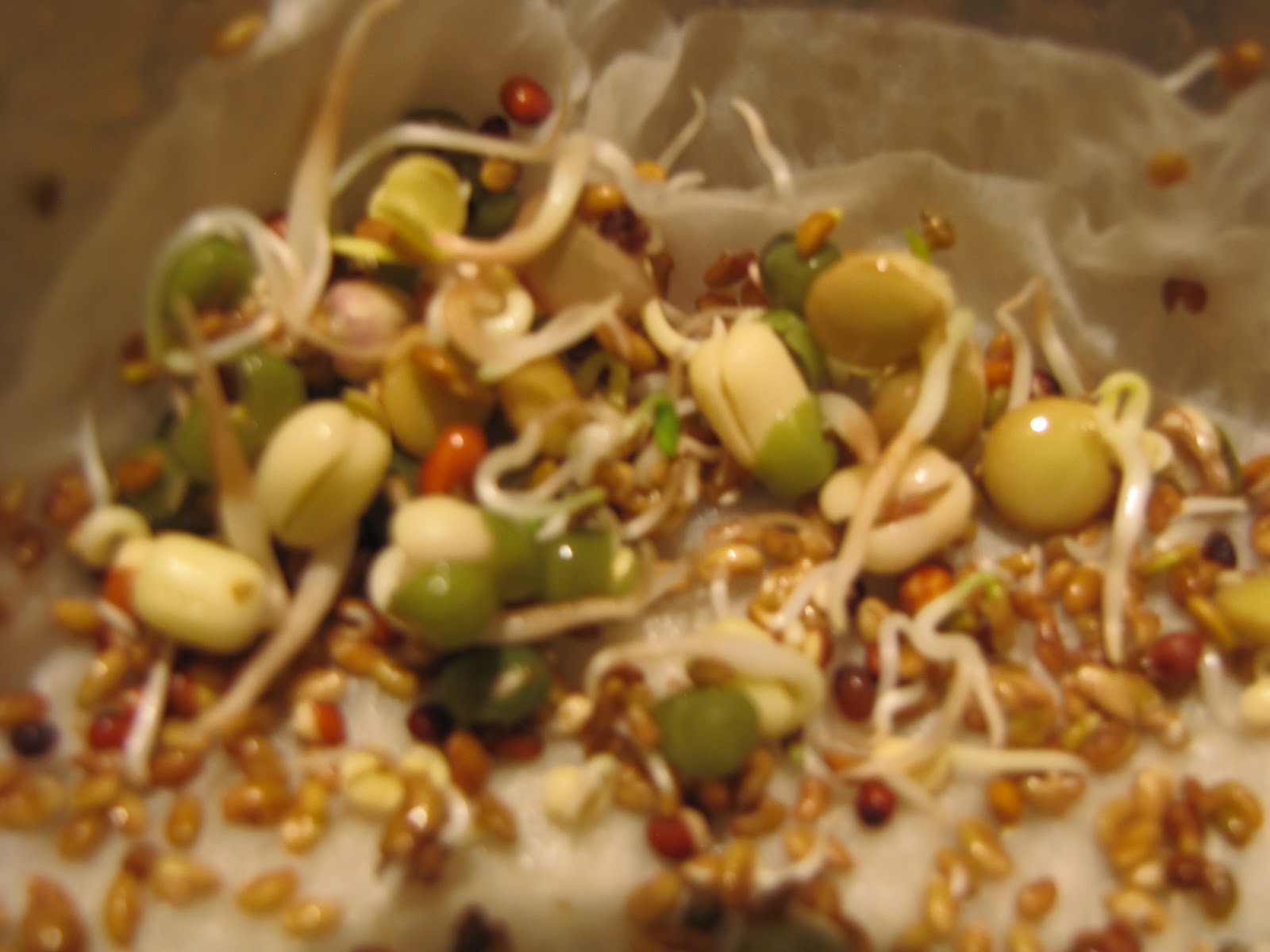
"Sprouts are cheap, easily accessible and an unpolluted source of vitamin C, some protein, traces elements, and B Group vitamins. They are also a true organic food, if they are grown on your very own windowsill, without chemicals."
Sprouting could literally be a life saver. I grow sprouts because they are so nutritious and also because my children eat them and don't know they are eating veggies.
I buy sprouting seeds from Honeyville Grain, but the container above I bought at the Self Reliance Expo last year.
They also come in smaller bags. You don't need to buy a special bag of sprouting seeds. There are many seeds and grains that can be sprouted. Wheat, garbanzo, alfalfa, mung beans, barley, lentils, whole peas, and many more are all able to be sprouted. Experiment with different seeds and grains and find which ones you prefer. I really like the salad mix (above) because it tastes like those yummy garden fresh peas. They just taste fresh and healthy.
These are the two contraptions that I use to sprout. The mason jar on the left is quite easy to use and the least expensive (under $5 for the lid). Put in a tablespoon of sprouts, soak over night (the seeds are soaking in the picture), and just rinse twice a day until sprouts form, about 3-5 days. It can also be done without the plastic straining lid. I started sprouting with a canning jar, cheese cloth and the canning lid ring. The other option is a sprouter. I really love the Victorio Seed Sprouter, on the right, because it pretty much does all the work for you. You pour the sprouts on each layer (about 1/2-1 T), add 2 C of water twice a day, and it soaks, drains, and grows the sprouts. There is no need for soaking and rinsing and draining. With 3 different levels you can stagger your growing or grow different kinds of seed in each one. Remember that sprouts don't like the sunlight. You can put them in the sun once sprouted to turn them green but they need a warm dark spot to grow. It really is just that simple!!
We eat our sprouts fresh out of the sprouters, but they need to go in the fridge once they are big enough to eat. (when the sprout is the length of the seed you can eat it). They should stay good for about 1 week in the fridge. Mine never last that long because they get eaten. Sprouts are great for salads, sandwiches, soups, muffins, breads, dinner casseroles, etc, etc. They can be added to anything.
If you and your family needed quick nutrition in an emergency, having sprouting seeds is the answer. Gardening has its place but it can take months. Sprouting takes only days and allows you to grow your own food storage. Storing sprouting seeds takes up little space and they last for many years, in the right conditions (dark, cool environment), and are relatively inexpensive. I don't think I will ever have enough storage space to store the recommended amount of wheat for 7 people, but I can store a years worth of sprouting seeds. Think of how many sprouts you'll get out of 1lb of wheat, a lot!! One tablespoon of wheat will create one full layer sprouts in the Victorio Sprouter. That's quite the bang for your buck!! This is one area of preparedness that everyone can do and should do today. The health benefits alone are why everyone should be sprouting.
Showing posts with label legumes. Show all posts
Saturday, April 21, 2012
Saturday, October 9, 2010
Recipes Using Beans
Graham Crackers
1 ¾ C whole wheat flour
¼ C white bean flour
1/3 C powdered milk
¼ t baking soda
1 t (scant) baking powder
½ t cinnamon
pinch of salt
Mix all above ingredients and then add:
1/3 C oil
½ C warm honey
1 t lemon juice (or vinegar)
1 T vanilla
2 T water
Mix all until well moistened. Spray a jellyroll pan with cooking spray and roll out dough thinly onto pan. Prick with fork. (I actually flip my pan upside down and roll the dough on that side. It makes it easier to cut after cooking) Bake at 350 for 8-10 minutes. Remove from oven and cut into graham cracker rectangles with a pizza cutter. It can be tricky finding the right depth to roll the dough. The thinner the dough the crunchier the cracker.
Black Bean Cakes with Mole Salsa (from tasteofhome.com)
1 can black beans rinsed and drained
1 egg beaten
1 C shredded zucchini
½ C dry breadcrumbs
¼ C shredded Mexican cheese blend
2 T chili powder
¼ t each salt, baking powder, and cumin
2 T olive oil
Mash the beans and add all ingredients and mix well. Shape into 6 patties and brush both sides with oil. Place on baking sheet and broil 3-4” from heat for 3-4 minutes.
Salsa-
2 med. Tomatoes chopped
1 T lime juice
1 small green pepper, chopped
1-2 t minced chipotle pepper in adobo sauce
3 T grated chocolate
1 t honey
1 green onion thinly sliced
2T minced fresh cilantro
Combine all ingredients and serve over patties.
October Goals
Beans-60lbs per person per year. Beans, peas, lentils, nuts, and sprouting beans. Store in a cool dry place and dry beans will last 30+ years. Canned beans have a shelf life of around 2 years. Rinse your canned beans and soak dry beans to lessen the "effects" of beans. Soak dry beans for 8-12 hours, rinse and add new water. Simmer and cook as directed.
Cold weather clothing and bedding-Take inventory of your coats, hats, gloves, boots, sleeping bags, long underwear, ski clothing, bedding and blankets. Have a year supply of clothing for children. Keep blankets and gloves in your car for emergencies.
Enjoy the journey!
Enjoy the blessings!
Feel the peace!
Labels:
beans,
graham crackers,
legumes,
october goals,
recipes
Saturday, October 2, 2010
October Goals
Fall is here, Conference has started and we have a new month of goals to accomplish. If you have been procrastinating all year, today is the day to start. This month we are storing LEGUMES. Beans, peas, and lentils all fall into this category and you will need to store 60lbs per person per year. Many legumes can be purchased at the LDS cannery.
Black beans 25lbs $14.50
Pinto beans 25lbs $16.30
White beans 25lbs $14.10
Beans eaten with grains or nuts will make a complete protein. In a situation where you don't have meat or eggs you can still have a complete protein with beans and grains.
I found a great site that has sorted out all the different kinds of legumes and has great pictures and definitions. Click HERE to read this great information.
Our other goal for October is to store cold weather clothing, shoes and bedd
ing. Could you live for a year without buying winter coats, boots, hats, mittens, etc? If you have children you need to have a year's worth of clothing stored. In the event of an evacuation or an emergency and you were in a car or tent over night in the middle of winter, would you be prepared with blankets and sleeping bags?Don't hesitate! Prepare today!!
Labels:
Be prepared,
legumes,
october goals
Subscribe to:
Posts (Atom)